Seizing opportunity, advocating for change
Melanie Goldring, AB ’17, MSW/MSP ’19
By Ginger O’Donnell
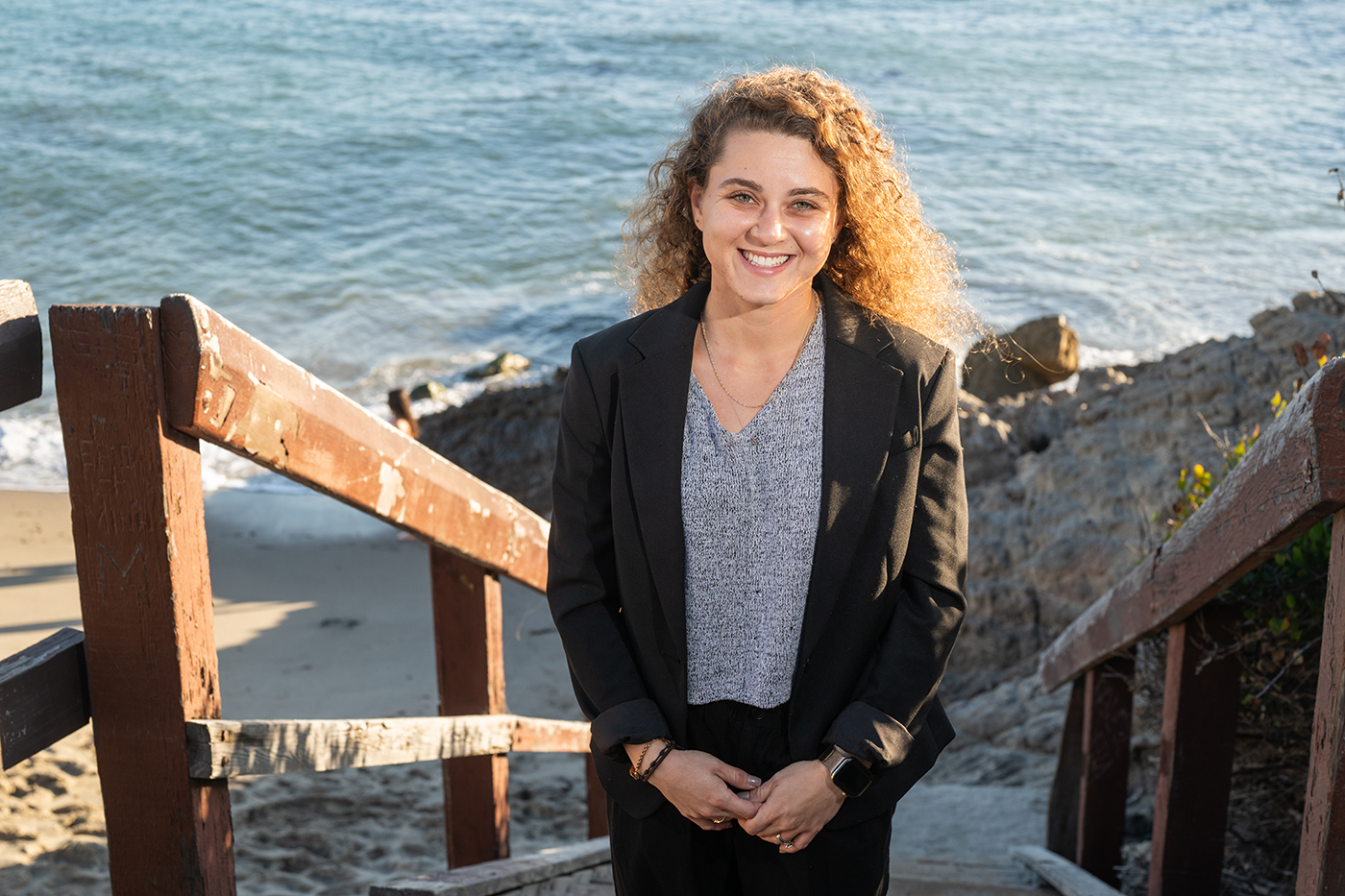
Melanie Goldring, AB ’17, MSW/MSP ’19, has always been driven and tenacious. Throughout her life and career, she has found ways to make productive use of challenges, leaning into the experiences that present themselves and maximizing their inherent opportunities for personal and professional growth.
Today, she serves as manager of organizational capacity and strategy for the DREAM Project, a youth education and community empowerment organization based in the Dominican Republic. She also is executive director at AYUDA (American Youth Understanding Diabetes Abroad), where she oversees the recruitment, training, and mentorship of youth volunteer diabetes educators, working remotely from her native city of Los Angeles. Melanie’s success and impact at these two organizations helped earn her recognition from WashU via the 2024 Brown School Emerging Leader Award.
A challenge that would shape Melanie’s entire life trajectory, as she sees it, surfaced a few days prior to her 12th birthday when she was diagnosed with Type 1 diabetes. Undeterred, she swiftly took responsibility for managing her condition. By age 17, she was serving as an international volunteer for AYUDA, teaching children and families about diabetes in Ecuador and subsequently in the Dominican Republic.
Melanie’s desire to build a world where all young people can attain the resources necessary for their well-being led her to attend WashU, studying psychology in Arts & Sciences alongside minors in Spanish and Children’s Studies. During the summer between her sophomore and junior year, she joined the research lab of Lori Markson, professor of Psychological & Brain Sciences, where she helped lead a study on literacy development in early childhood. “I was given the opportunity to work in the lab of my dreams, co-running a study, and those responsibilities shaped my confidence as a leader,” she says.
“I was given the opportunity to work in the lab of my dreams, co-running a study, and those responsibilities shaped my confidence as a leader.”
Melanie Goldring, AB ’17, MSW/MSP ’19

Earlier in her sophomore year, Melanie also attended a career fair that introduced her to the field of social work. She seized the opportunity, enrolling in the university’s 3-2 MSW program for undergraduates who want to earn a bachelor’s degree and a master’s degree in social work in five years. She also added a dual degree with WashU’s Master of Social Policy (MSP) program, which was previously only open to select international students through global university partnerships. Melanie and a group of her peers advocated to make the degree more broadly available and joined its first expanded cohort.
At the Brown School at Washington University in St. Louis, Melanie learned how to be a strategic thinker from award-winning professors like Lorien Carter, whose courses allowed her to develop a project she would later use to land her first postgraduate job. Others, such as Anna Shabsin, helped her understand how to both passionately and realistically pursue social change in the context of policy work. “Anna Shabsin is my guiding light. I’m obsessed with her,” Melanie says. “She teaches you how to move the needle toward a long-term goal in a way that creates tangible change in the real world.”
Meanwhile, Melanie’s introduction to the Dominican Republic, which she affectionately calls “the DR,” set off another chain of opportunities that would change her life. She met her future husband there, and she identified the country as the place where she wanted to live and work post college. “In the DR, the people are some of the warmest I’ve ever met,” she says. “We do outreach to communities where there isn’t even running water or electricity, but you’ll walk up to the front door and be invited to stay as long as you want. It’s hard to describe the immense hospitality I’ve received there.”
When the coronavirus pandemic hit, Melanie was finishing a fellowship program in the Dominican Republic with the DREAM Project. She decided to stay in the country during the global health crisis — a move that, as it turns out, helped facilitate the opportunity to work full time with DREAM upon completion of her graduate studies.
Looking back, Melanie sees how one leadership opportunity led to the next by virtue of being open to what she could learn and boldly pursuing her goals. She encourages other WashU students and future leaders to similarly self-advocate. “If you know what you want — or you don’t know what you want, but you know you want something — seek it out and advocate for yourself,” she says. “Believe in your own capability.”

Know your power
Deko Devins is the President and CEO of Azimuth Energy, an engineering, construction, and development services company focused on the implementation of renewable energy and energy efficiency strategies. In 2024, Azimuth received Minority Business Enterprise (MBE) certification, distinguishing it as one of the few solar Engineering, Procurement, and Construction (EPC) companies with this designation.
Redefining leadership, one meal at a time
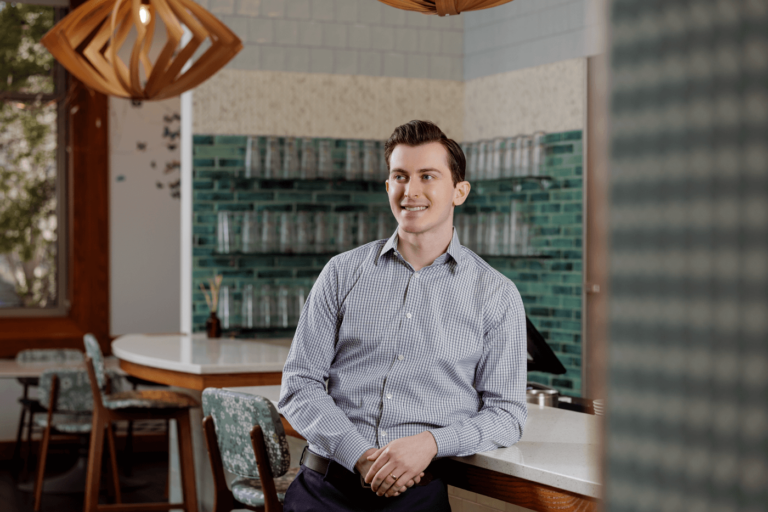
Andrew Glantz, BSBA ’17, is the founder and CEO of GiftAMeal, a mobile app that provides a meal to someone in need when a user takes a photo at a partner restaurant. What began as a student startup in 2015 has expanded to more than 1,000 restaurants, with over 2.4 million meals provided to families across 44 states.
The long game: A leader for life
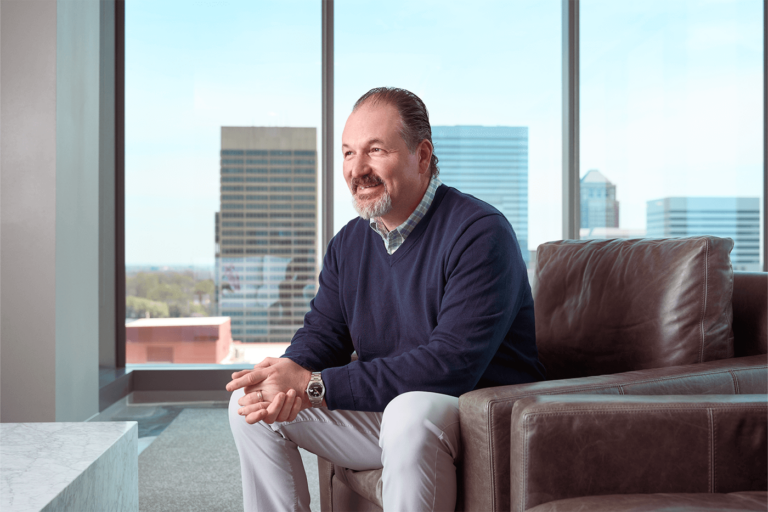
At WashU, Chris Swenson, AB ’93, BSBA ’93, learned to explore and embrace diversity of thought that would shape his leadership in the legal and business worlds.
Leading through connection: From research to advocacy
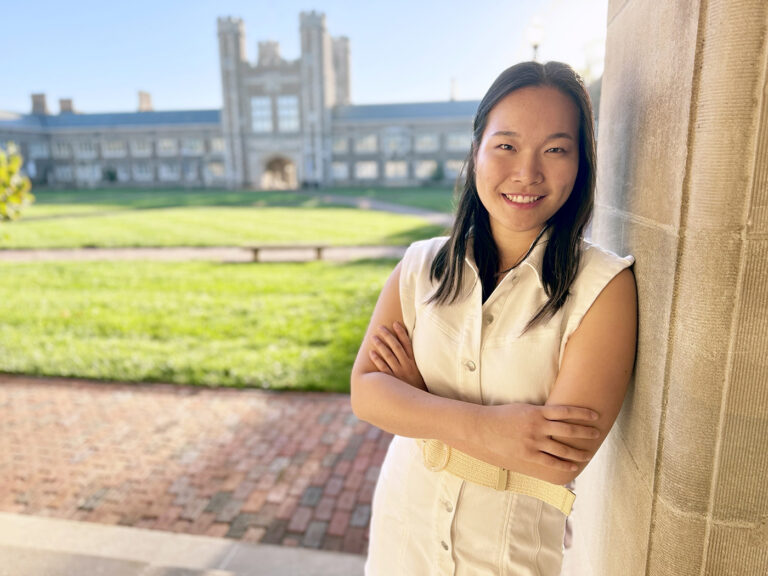
Tiffany Zhu, Class of 2026, is the first in her family to attend college. Well into her fourth year, she is still drawing deeply on the opportunities that WashU provides. In doing so, she is positioning herself to become a leading public health physician, committed to creating a system of holistic care so that more people feel connected to healthcare.
Meet more WashU changemakers
Greater Access

Healthier Lives

Flourishing Communities
How can one person make a difference and stay connected?

Give


Connect

Reunite