WashU’s collaborative spirit nurtures rising star
Bisiayo Fashemi, PhD ’21
By Juli Leistner
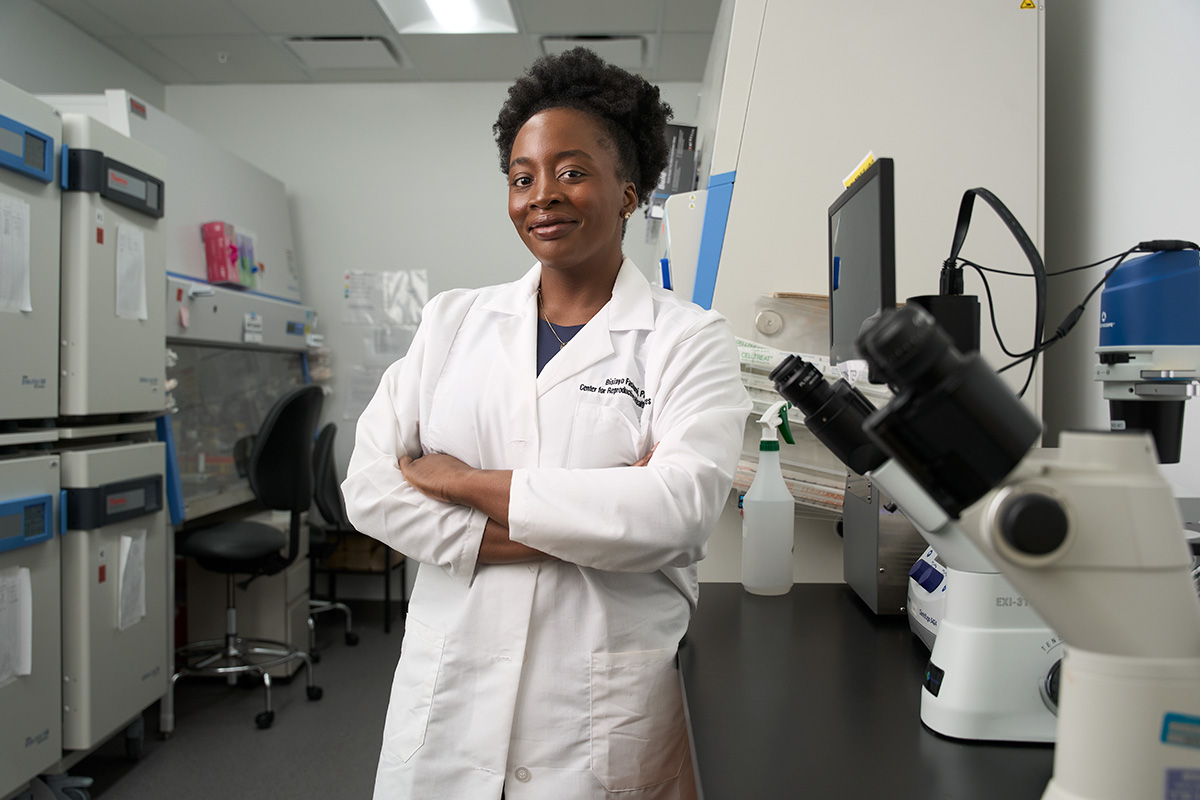
Bisiayo Fashemi, PhD, always knew she wanted to be a scientist. Starting in high school and continuing through her undergraduate years, the Boston native seized every opportunity to conduct lab research, with a particular focus on improving women’s health.
She moved closer to her career dream by entering WashU’s Roy and Diana Vagelos Division of Biology & Biomedical Sciences (DBBS) to pursue a PhD — and realized it fully when she earned her doctorate in developmental, regenerative, and stem cell biology in May 2021.
Her scientific journey has evolved from studying the fundamentals of organismal development in zebrafish to now seeking new therapeutic targets for ovarian cancer. As a graduate student, she was honored with the Rosalind Kornfeld Student Leadership Award from the WashU Academic Women’s Network and with induction into the Bouchet Graduate Honor Society, which recognizes outstanding scholarly achievement. Now a postdoctoral research associate in the lab of Dineo Khabele, MD, she has secured competitive funding from the National Institutes of Health (NIH), the Ovarian Cancer Research Alliance, and philanthropic sources — evidence of the impact and promise of her work.
Through it all, this rising star credits the people and culture of WashU for inspiring her career choices and easing her path. Today, her drive to make a substantial difference in women’s health is stronger than ever.
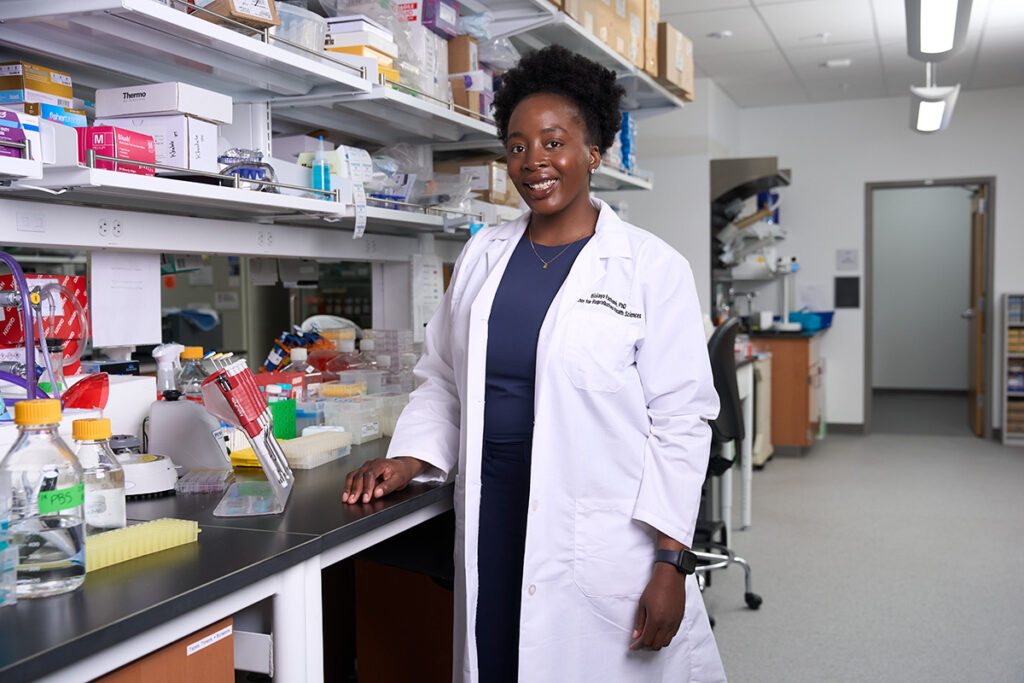
“There are so many faculty who have been tremendous mentors throughout my entire journey. I wouldn’t be where I am without their support.”
Bisiayo Fashemi, PhD ’21
How did you get into biomedical research?
For pretty much my entire life, I’ve known I’ve wanted to be in research. When I was in high school, I did research at Brigham and Women’s Hospital and Harvard Medical School. My principal investigator there inspired me to want to advance women’s healthcare. When I was an undergraduate at Union College in upstate New York, I conducted research at Tufts medical school for one summer. Then at a symposium, I found out about the DBBS’s summer research program, and I spent the next two summers at WashU Medicine studying zebrafish in the lab of Lilianna Solnica-Krezel, who was then chair of the Department of Developmental Biology. That experience totally cemented for me that I wanted to pursue a PhD. I really loved the idea of studying how you go from a single cell to a fully formed organism — which in zebrafish happens within 24 hours! The postdoc and the faculty who mentored me gave me a lot of freedom to ask my own research questions and really take ownership of a project, and I really benefitted from that.
What made you choose WashU for your doctoral studies?
It came down to choosing between WashU and the University of Michigan. What sealed it for me was knowing that at WashU I would have a great support system. I knew a lot of the faculty and students, and I knew how supportive the culture was. Also, during my selection process, I was so impressed with the DBBS’s Next Generation of Science Scholars program. It brings together cohorts of DBBS students from underrepresented groups and provides a network of support as they go through graduate school together. Other schools have similar programs, but I could tell WashU’s was far more structured and intensive. So I knew I was going to have a group of people who were rooting for me. It was an easy decision to come to WashU.
Overall, what was your graduate school experience like at WashU?
It was amazing. I absolutely loved it here. There are so many faculty who have been tremendous mentors throughout my entire journey. I wouldn’t be where I am without their support. The collaborative spirit at WashU is just amazing; the faculty, the students — everyone was just really excited to help me. I always felt like we were all in it together. I know from talking to graduate students at other universities that it’s not this way at other schools.
How did WashU set you up for success?
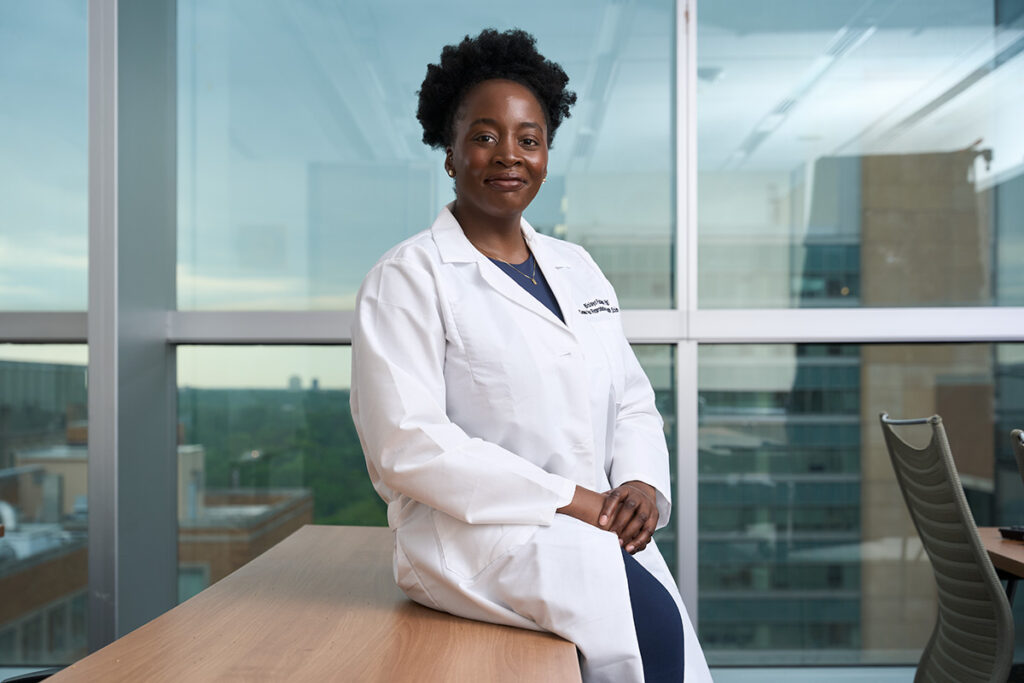
WashU has amazing resources that have helped me move my research forward, in grad school and also as a postdoc. If there’s a skill you want to learn, somebody will find a way for you to do it. I’ve been able to get training in bioinformatics and genomics, on how to culture stem cells — and then I can apply that to my research. It’s just incredible. It’s a huge advantage of being here as a trainee.
What are you working on now, as a postdoc?
I’m doing research in the lab of Dineo Khabele, who is chair of OB-GYN. My work focuses on high-grade serous ovarian cancer, which is one of the leading causes of cancer-related deaths in women in this country. I’ve developed organoids — those are miniature, lab-grown organs made from patients’ stem cells — to serve as a lab model of the disease. I’ve validated that the organoids accurately represent what’s going on in patients’ tumors. Now we are doing genomic analysis to understand tumor behavior over time, with the ultimate goal of identifying new therapeutic strategies to overcome treatment resistance and metastasis. The hope is that once we identify those treatment targets, we can develop potential therapeutics and then use our organoids to test them. I was able to present this work at the American Association for Cancer Research last year, which was really exciting for me.
My position as a postdoc will go on for about another year, and I am seeking federal funding to transition to a faculty position — either at WashU or somewhere else. Knowing that I have the opportunity to make a difference for women’s healthcare is really rewarding.
Can we stop cancer before it starts?
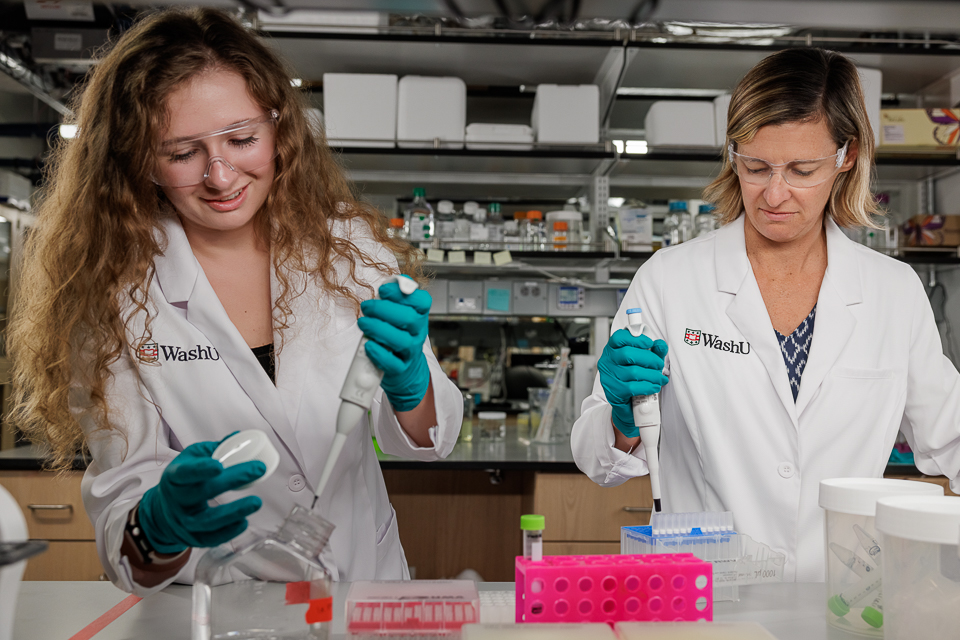
We’re one step closer. A grad student-led WashU research team found promising answers by taking a closer look at RNA editing.

Driven to make a difference
At WashU, the pursuit of public health is about enabling people to lead longer, healthier lives. Long before the establishment of a new school dedicated to this effort, a team of doctors at Washington University School of Medicine in St. Louis boldly advocated for its mission: combatting breast cancer, a top cause of death for women in the United States.
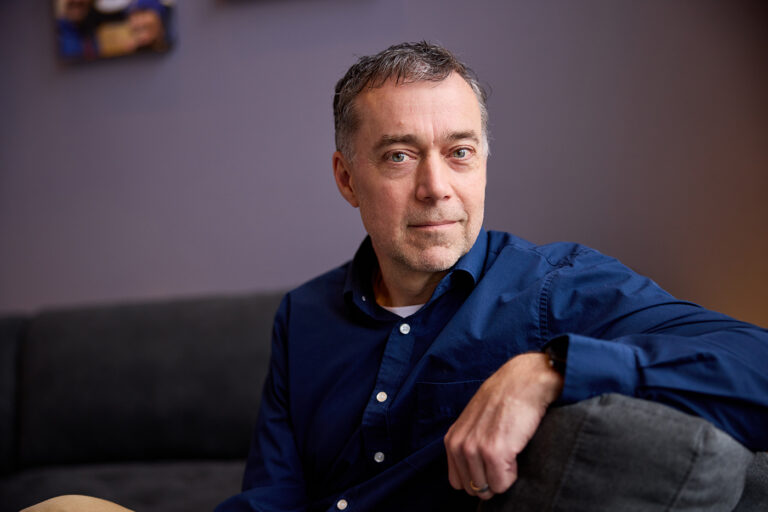
Expert hands, timely hope
WashU Medicine’s Taylor Family Department of Neurosurgery is home to the latest innovations in neurosurgery and neurotechnology to address complex brain tumors. Eric C. Leuthardt, MD, performed a groundbreaking, minimally invasive procedure in 2010.
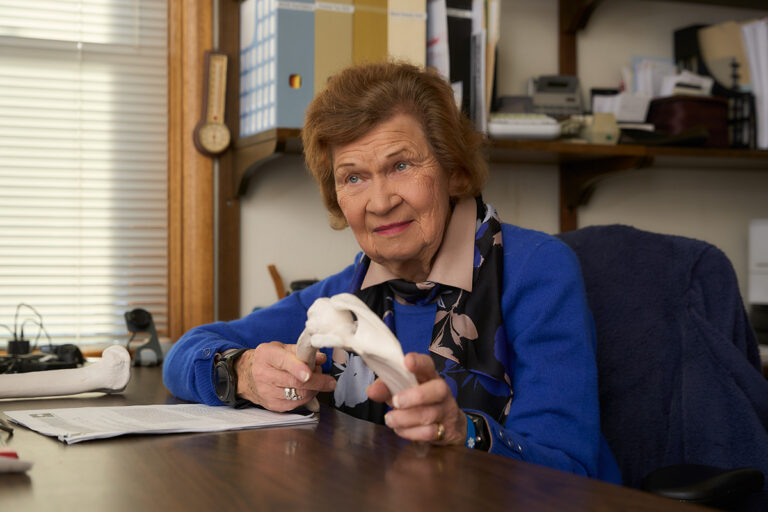
Movement as medicine
At age 88, Professor Emerita of Physical Therapy Shirley Sahrmann, BS ’58, MA ’71, PhD ’73, PT, FAPTA, is still as passionate about advancing the field as she was when she joined the WashU faculty in 1961. Now retired, the revered educator of more than five decades — whose scholarship has shaped what it means to practice physical therapy today — continues to advocate for the role of movement in preventing illness and fostering healthier lives.
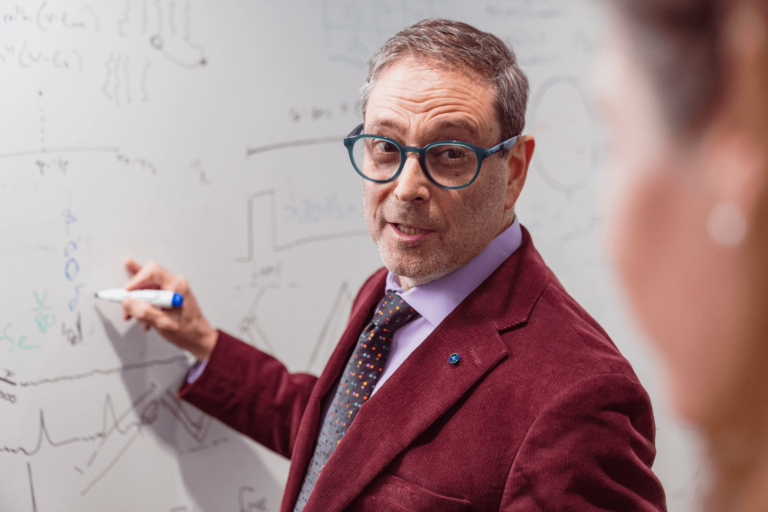
The healing power of neuroscience
Physician-scientist Michael Avidan, MBBCh, leads WashU Medicine’s Department of Anesthesiology, a world leader in anesthesiology research, education, and patient care.
Meet more WashU changemakers
Greater Access

Flourishing Communities

Future-Ready Leaders
How can one person make a difference and stay connected?

Give


Connect

Reunite