Internships shape a career path
Ariel Nochez, Class of 2027
By Juli Leistner
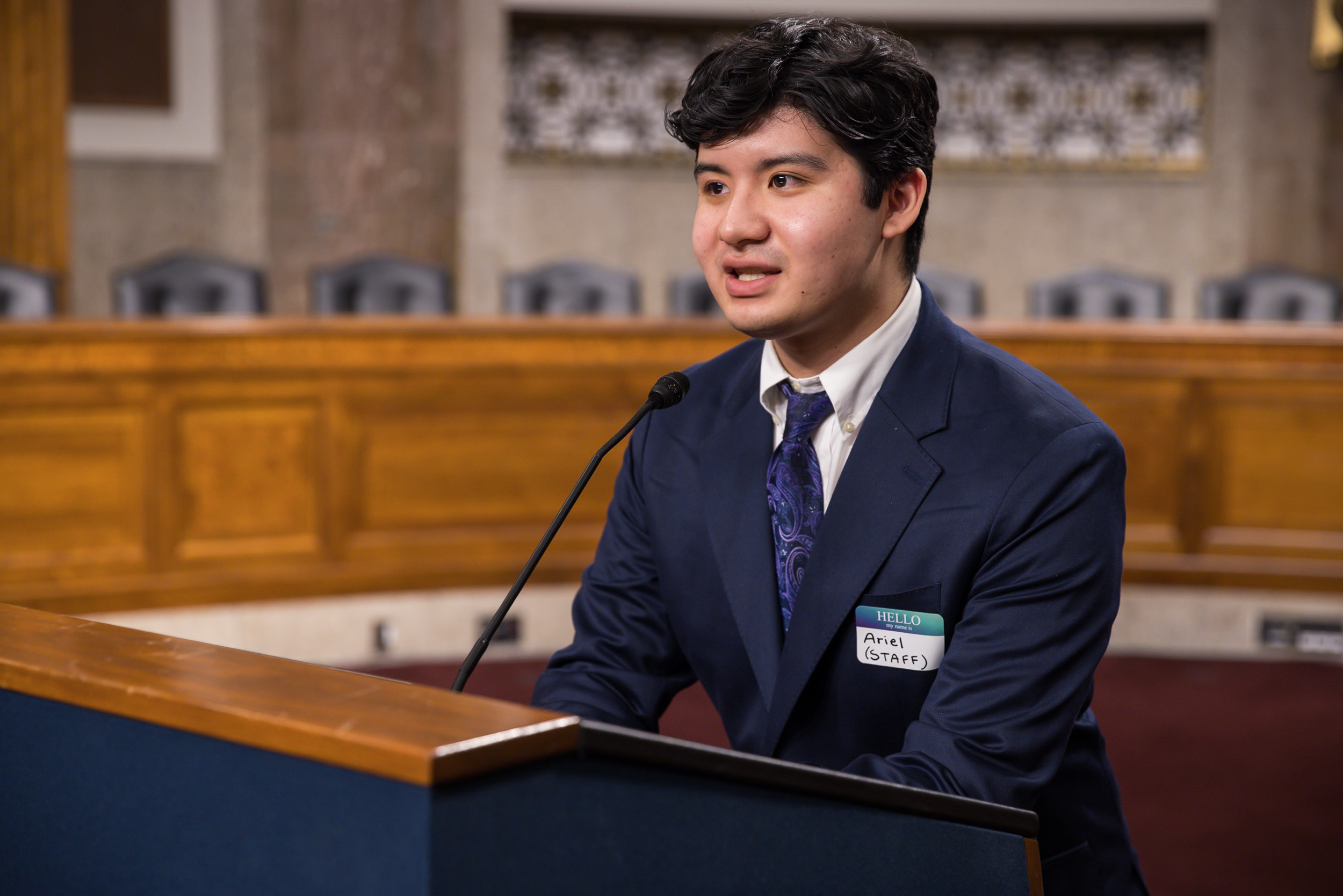
Ariel Nochez came to WashU in August 2022 with a passion for technology. Since then, through studies on the Danforth Campus and far beyond it, he has been layering on new interests, forging a service-oriented career path that bridges disciplines. A student in the McKelvey School of Engineering, he is majoring in data science and linguistics with a minor in speech and hearing sciences. Now in a gap year, Ariel has completed an amazing array of internships, culminating in his current job on Capitol Hill, just an hour from his hometown of Germantown, Maryland. Ariel returned to WashU in 2026 to complete his final three semesters. In the following interview, he shares how his internships, made possible through various funding sources, have shaped his future.
You have pursued several internships, starting after your first year, and also decided to take a gap year midway through your junior year. Why is that?
I come from a very technical background, and I was building my skills in that area at WashU. But I wanted to explore how society and government intersect with technology and how that plays a role in people’s lives. I felt like I needed some real-world experiences to help me do that.
Tell us about your internships.
My first internship was through WashU’s Gephardt Institute for Civic and Community Engagement. I worked with a nonprofit called Unlocked Labs and spent a summer in a prison teaching coding to incarcerated individuals as a skill set and a form of rehabilitation. That experience inspired me to focus more on public-interest technology, which is the idea that technology should help the average person rather than being used just for making a profit.
Next, I went to Cornell University and worked in a computational psycholinguistics lab focused on making machine learning models more ethical.
Then I started a gap year, which I’m still in right now, and have been using that time to explore my new focus of how government policy intersects with technology. My first internship in this area was for a nonprofit called TechCongress, which is dedicated to getting more technologists into government to fill the knowledge gap between people who make policy and people who really understand the systems at play. Then I interned at the Brookings Institution, looking at how governments should regulate AI and emerging technologies to encourage more transparent practices.
“Having funding was essential for allowing me to pursue these internships. Without it, I just wouldn’t have been able to.”
Ariel Nochez, Class of 2027, McKelvey School of Engineering
Now you’re working on Capitol Hill yourself. How did that come about?
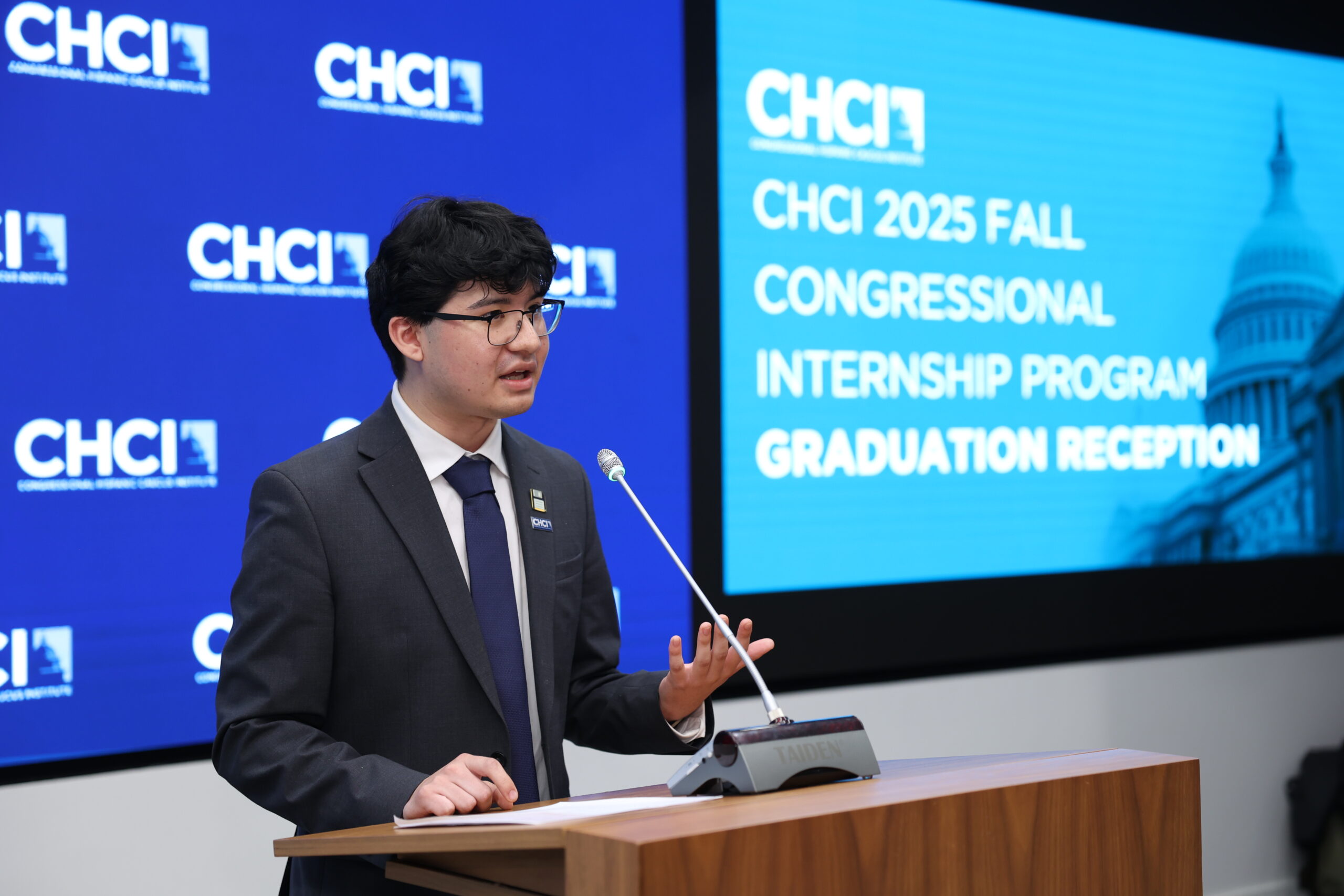
I work in the office of U.S. Congresswoman Luz Rivas, who represents California District 29 in the Los Angeles area. It started as an internship that I got with support from the Congressional Hispanic Caucus Institute, and now I’ve extended that internship. I wanted to work with Congresswoman Rivas because she’s a member of the House Subcommittee on Research and Technology and a lot of her portfolio comes within the technology area. She’s also an engineer, which interested me.
What does your work as a Congressional intern involve?
I welcome people into the office, take constituent calls, and do a lot of research on technology policy to help Congresswoman Rivas and her staff understand the background behind current legislation. Just as one example: There was legislation recently about data protection for immigrants. I researched what was in the bill, how data is currently used across federal agencies and how these agencies interact with that data. My research helped the congresswoman decide whether she wanted to support the bill.
How have your internships shaped your professional development and your career path?
My internships have been instrumental, because they allowed me to get out of my comfort zone and explore. They have really changed what I see myself doing in the future. I originally thought I would have a technical career, but now I want to work at that intersection of government, public policy, and technology in some capacity.
The importance of internships
When will you graduate, and what do you hope to do after graduation?
I plan to graduate in May 2027 with a bachelor’s degree in data science. Then I want to spend a few years at nonprofits exploring how to integrate technology into society to benefit more people, especially marginalized communities. Eventually, I want to get a PhD in computer science and explore the connection between technology and public policy.
What’s your message for people considering supporting student experiences?
I’m a first-generation college student who comes from a limited income background. Having funding was essential for allowing me to pursue these internships. Without it, these experiences just wouldn’t have been possible. Thanks to the support, I am able to just focus on my work without worrying about finances.
I also think it’s important that many of these internships are in fields that are not well paid, and we need more people to pursue these areas. I feel like my work is furthering WashU’s mission to help people and to be a force for good in the world. So that makes financial support much more powerful.
Is there anything else you would like prospective donors to know?
Everything helps. I think sometimes people focus on having to make a really big impact, but even helping just one person makes a difference in the world.
Can we help students get the jobs they want?
Students with internships are twice as likely to land a job at graduation. That’s why WashU makes paid internships available as early as the summer after their freshman year.
How an undergraduate scholarship paved the way for a student’s journey to WashU
Davin Hickman-Chow, BS ’25, intends to become a neurosurgeon — and he’s fully aware of the steep odds. With only 240–260 residencies available each cycle, this competitive reality shaped his academic journey from the start.

In test prep, representation matters
Angelica Harris, BS ’21, BSBA ’21, MS ’22, founded Top Tutors for Us in 2022, an innovative platform offering Black high schoolers individualized prep for standardized tests. In the following interview, she describes the origins of her tutoring business, WashU’s uniquely collaborative ethos, and the rippling impact of philanthropy in her life.

Cohen scholarship creates opportunities for families of educators
When Steve Cohen, BSBA ’89, and his wife, Jocelyn, established a scholarship at WashU in 2012, the gift was about more than supporting the university — it also had personal significance. In honor of Steve’s mother, who was a teacher, they set up the scholarship to benefit students who had educators in their families.
An experience of accessibility
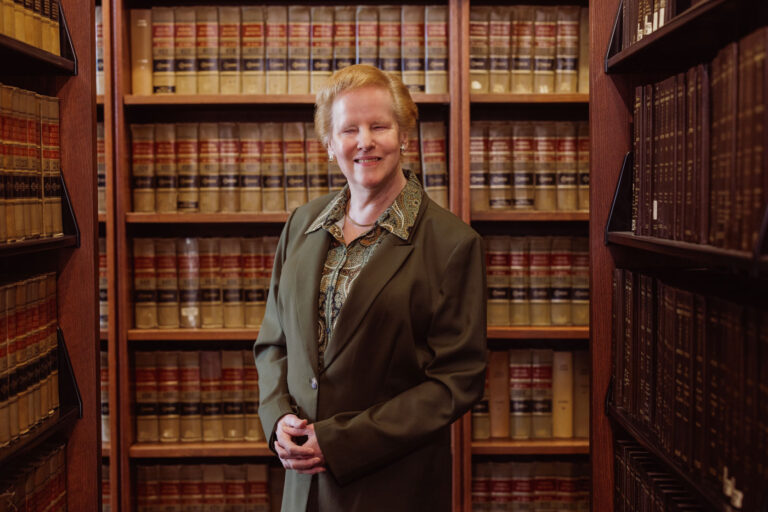
Alice Conway, AB ’76, MA ’79, PhD ’83, JD ’83, pursued her joint passion for literature and law at WashU. Her study of comparative literature spanned five languages, including works in French, German, Spanish, Latin, and English — all translated into Braille, as Conway is blind.
Meet more WashU changemakers
Greater Access

Healthier Lives

Flourishing Communities
How can one person make a difference and stay connected?

Give


Connect

Reunite