At the intersection of data, climate, and human health
Bo Li, Stanley A. Sawyer Professor of Statistics & Data Science
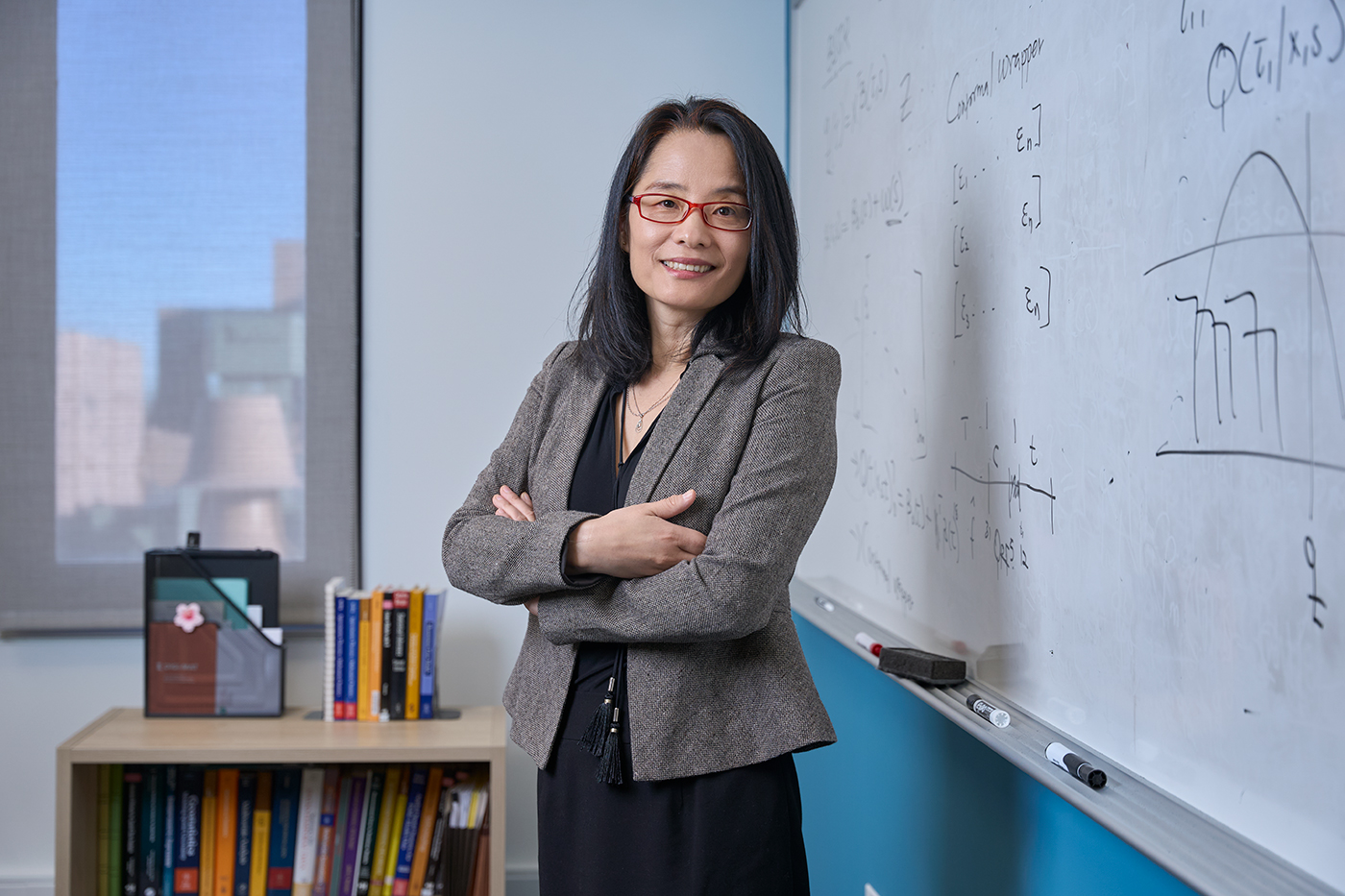
By Zellie McClelland
In 2024, Bo Li joined Arts & Sciences as the Stanley A. Sawyer Professor of Statistics and Data Science. Her professorship — coming soon after the department’s formation — signals WashU’s deepening commitment to high-impact, transdisciplinary scholarship. And as the newly appointed co-director of Arts & Sciences’ Transdisciplinary Institute in Applied Data Sciences (TRIADS), Li has already hit the ground running. In the following conversation, she describes the potential of data science to address interwoven challenges at the nexus of environmental change and human health.
You pursue research across environmental exposures, climate variability, and human health. What do you see as the unifying thread that ties your work together?
Data science is a very broad idea. In many ways, anyone who is dealing with data is engaged in some form of data science. And that data could come from countless fields — from biology, from the humanities, or from public health.
As a statistician or data scientist in the formal sense, I use and develop cutting-edge tools that are tailored to organize, model and analyze the data behind whatever problem I’m studying. That’s the thread that ties together data science, environmental systems, and public health.
By designing techniques capable of detecting patterns or correlations or structural relationships in seemingly random, stochastic data, I can try to ascertain how environmental factors might shape human health outcomes. Is weather related to West Nile virus outbreaks? Does pollution affect birth weight? Could long-term exposures play a role in aging or even Alzheimer’s disease? The answers to these questions can guide interventions.
Why do you believe this is the moment for WashU to deepen investment in data-driven, cross-disciplinary approaches to issues like climate change and community health?
There’s a national trend in science toward convergence. Scientists from different fields increasingly believe they should all come together to study the same big issues. Take climate change. You have climate scientists, public health researchers, biologists, and ecologists, each trying to understand the same problem from different angles.
Because the climate system is dynamic, our ecosystems change as well, and everything interacts during this process. If you study just one side, it gives you too narrow a view of the real impact of climate change. But if you combine these perspectives, you get a more comprehensive picture of what’s happening. That’s why transdisciplinary research is such a priority right now.
“By designing techniques capable of detecting patterns or correlations or structural relationships in seemingly random, stochastic data, I can try to ascertain how environmental factors might shape human health outcomes. Is weather related to West Nile virus outbreaks? Does pollution affect birth weight? Could long-term exposures play a role in aging or even Alzheimer’s disease? The answers to those questions can guide interventions.”
Bo Li, Stanley A. Sawyer Professor of Statistics & Data Science
And at WashU, I really see this convergence happening. The university is investing deeply in this area. We are all working toward healthy communities, and that vision is very exciting.
How does your research connect directly to the lived experiences of communities facing environmental stressors such as heat, flooding, and pollution?
Again, this comes down to collaboration. I’m not an epidemiologist or a public health, ecology, or biology expert, but my collaborators are. They tell me what the main obstacles are and what questions matter most for their research.
As they explain, I start thinking about how to translate their questions into a statistical problem where I can contribute. That’s really how these scientific questions meet data science.
For example, right after I joined WashU, a group of researchers from anthropology, environmental engineering, public health, and biology invited me to join a project seeded by TRIADS.
They’re studying how climate change affects human health in Cahokia Heights, a St. Louis community where many disadvantaged families live, and the conditions are difficult. There’s constant flooding, water contamination, and exposure to bacteria. I immediately saw the connections between environment, climate change, the local neighborhood, health disparities, and the chance to make an impact.
We put together a proposal based on the TRIADS project, and it was just funded by the National Science Foundation for $3.6 million. Through my analysis, I hope to be able to predict flooding patterns, and to estimate if infrastructural improvements might reduce health hazards.
It’s my dream project.
You’re training the next generation of scholars, who will face complex climate-driven health challenges. What do you believe they most need to learn — beyond technical skills — to foster flourishing communities?
One very important thing I always tell them is to think about whether a given problem is truly interesting or important. I don’t want them to just solve a statistical problem. It has to be a meaningful scientific question.
I don’t want them to publish just for the sake of publishing. I want them to get into the habit of choosing projects carefully. Whatever they spend their time and effort on should be meaningful and, I hope, for the good of society.
I tell them to think big in order to solve big.
Can we make drinking water safer?
Trusted Tap, a new program from WashU’s Center for the Environment—with collaboration from McKelvey Engineering, the School of Public Health, the Sam Fox School, and the Skandalaris Center—provides the testing and information people need to ensure they have clean water.
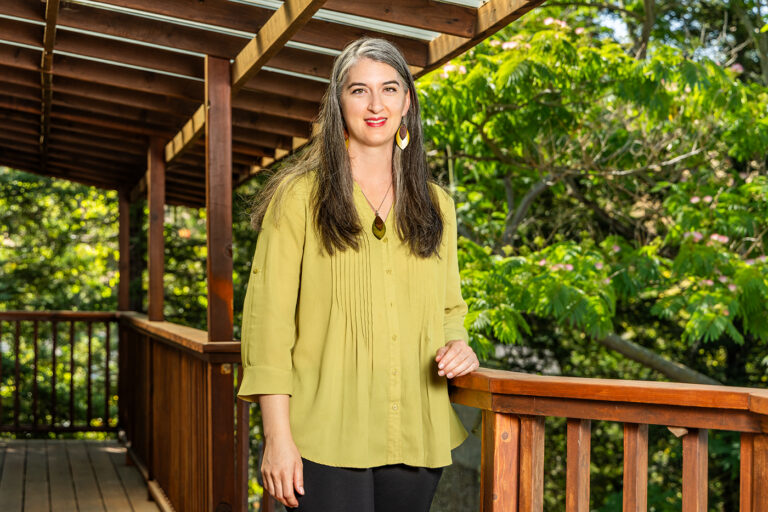
Grounded in global community
Claudia Romeu, AB ’08, grew up in Puerto Rico, where she was raised with strong values, including a deep sense of social responsibility toward others. At the same time, her upbringing was shaped by a relative lack of cultural diversity. Studying social anthropology at WashU helped open her eyes to other ways of living and the breadth of human experience.
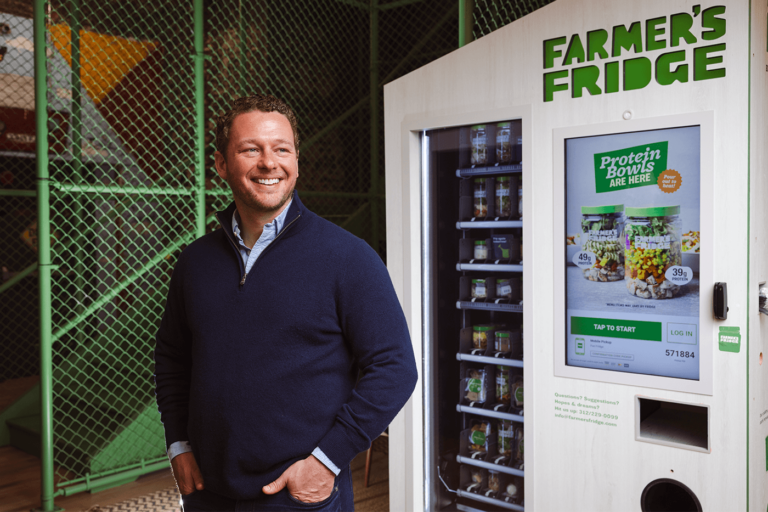
Revolutionizing nutrition: The startup transforming vending machines with healthy choices
Back in 2013, Luke Saunders, AB ’10, founded Farmer’s Fridge, a start-up with a mission to make healthy food more accessible. Today, that company operates in more than 2,000 locations and has served 13+ million meals from its vending machines nationwide.
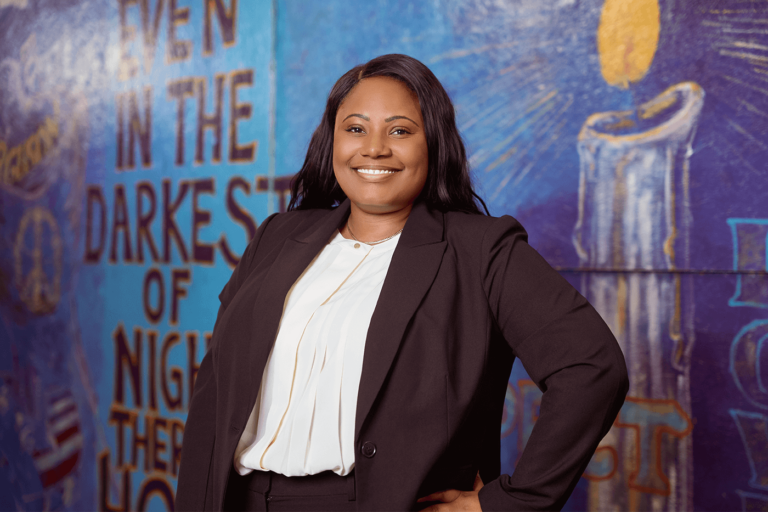
Building healthier communities
Growing up in the City of St. Louis, Doneisha Bohannon, MPH ’14, witnessed how neighborhoods shape health and opportunity. This upbringing, combined with her undergraduate studies in geography and sociology, motivated her to address disparities in her community.
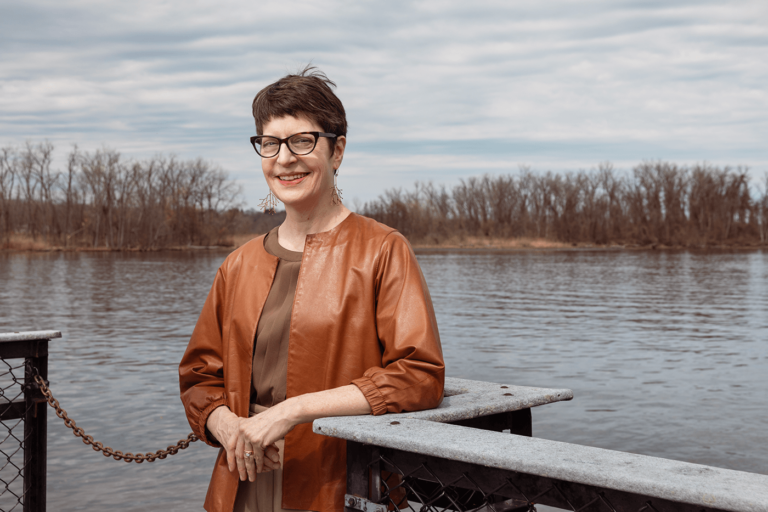
Powered by design, anchored in community
Having grown up in Atlanta, Angelyn Chandler, AB ’89, made it her goal to settle in a highly walkable city with robust public transportation. Upon finishing her graduate degree from Princeton University, she landed in New York
Meet more WashU changemakers
Greater Access

Healthier Lives

Future-Ready Leaders
How can one person make a difference and stay connected?

Give


Connect

Reunite